Get your business running without relying on you
For MDs and owners of 20 to 200 person UK businesses. Get your team delivering on their own, so you’re not the one who ends up sorting things out and thinking for the team.
Proven with 152 MDs, owners and leaders in engineering, manufacturing, construction, tech and consultancy firms.
Sound familiar?
- Your business is growing, but more of it depends on you than it should.
- You have capable people, but you’re still the one who notices when things go off track.
- Your managers are technically strong. But they’re not getting the best out of their people.
- You’ve been clear about what’s expected. More than once. But the same issues keep coming back.
- You want to focus on running the business. Not sorting out the same people issues week after week.
The longer this goes on, the more it costs you
- Your managers and senior staff are doing work that’s below their pay level. Work that should be done by someone more junior.
- Projects take more hours than you quoted to the client.
- Extra work gets done that never reaches the invoice.
- Your best people start to think about leaving because their manager isn’t dealing with issues, noticing what they need, or managing them in the way they need.
- Sometimes the work you’re delivering for clients isn’t to the standard you’d like.
All of this reduces your margin. Not only is it costing you money, but you’re having to get involved again when something slips that shouldn’t have.
None of this is a crisis. Everyone’s busy. Revenue is still coming in. But the gap between what you’re paying your people for and what they’re actually delivering is getting wider.
Most MDs know something needs to change. The question is whether this is the year that you change it, or whether you’ll be having the same repeated issues twelve months from now.
Testimonials
“We repaired the company strategy and business processes, we worked on coaching my team. All these things have strengthened the business and its management team. Leanne would always adapt the programme to cover what was needed at the time.”
Trevor Jee, Managing Director. Jee Engineering
“Leanne helped me handle challenging aspects of managing a business confidently. Situations that previously caused anxiety are now comfortable, especially those involving potential conflict.”
Mike Hodges, Managing Director. Apreco
“Leanne helped me focus on important issues and identify clear paths forward through difficult situations. The company is in a better position as a direct result of her methods.”
Phil Silver, Managing Director, Advanced Industrial Engineering
“Leanne has a warm, calm and logical approach. There was no dwelling on unnecessary topics; we honed down into core areas and then spent valuable time discussing and agreeing actions. Pragmatic actions specific to my individual situation rather than generalities.”
Alex Davis, Co-Founder. Condor Ventures
It’s not your team. It’s how the work is set up
Most MDs I work with have already tried the obvious things.
They’ve been clear about what’s expected. Set targets. Run team meetings. Maybe brought in an HR person or an advisory service.
Some of it helped for a while. Then things drifted back.
That’s not because your people aren’t capable. And the answer isn’t HR or a training course.
HR covers compliance, contracts, and policy. That’s important, but it won’t tell you why your ops manager avoids difficult conversations or why your senior team agree things in meetings and then nothing changes.
The real issue is usually a combination of things: priorities that aren’t specific enough to change what people actually do, no rhythm for following up on what’s been agreed, conversations that aren’t landing in the way you need them to, and roles where the line between “your work” and “their work” hasn’t been properly drawn.
I work with you on all of it. The strategy, the structure, the operating rhythms, and the conversations that make them work.
That’s what I’ll help you change, quickly.
What changes
What MDs notice within 12 weeks:
- Work gets done without you pushing it over the line.
- Fewer interruptions and “quick questions” during the day.
- Your managers start handling things you used to get pulled into.
- Decisions happen without waiting for you.
- Problems get dealt with earlier, before they land on your desk.
- Your senior team starts working more like a team that runs the business, not a team that reports to you.
- You get time back to focus on the work that actually grows the business.
How it works
Step 1
We map what’s actually going on
A conversation to understand your business, your team, and where things are getting stuck. We look at how work actually moves between people, where expectations are unclear, and what’s causing things to come back to you. No forms. No audits. Just a proper conversation about what’s really happening.
Most MDs I work with think they know what the problem is. And they’re right that something’s not quite working. But the real cause is almost always different from what they expect. One MD thought he needed to hire. He didn’t. He needed his existing team set up differently. Another thought the issue was around a specific person. It wasn’t. It was how the conversations were happening around them.
Step 2
We work on what needs to change
Fortnightly one-to-one sessions where we work on the things that will make the biggest difference.
That might be getting priorities clearer so your team knows what to focus on. Setting up a simple weekly rhythm so things get followed through without you chasing. Working on how you have the conversations that actually change how your managers operate. Or sorting out where work is falling between roles.
Every session is built around whatever’s live in your business that week. The work goes further than the conversation. You’ll come away with practical tools and templates, built for SMEs and adapted to your situation: the conversation you need to have with the person who isn’t performing, the structure that’s missing from how your team works, and the planning and prioritising approaches that free up your time for the work that really needs your attention.
By the end, you’ll have everything in place so the business runs without depending on you.
Step 3
Your team starts delivering differently
Within a few weeks, your managers start operating differently, because we’ve set up what they need to work effectively. Expectations are clearer, follow-through is sharper, and the conversations you’re having are landing in a way that actually changes how they work.
What’s different about working with me
Most MD support sits in one of two camps. Coaching gives you space to think. Consulting gives you frameworks. Both have their place but neither, on its own, changes how the business actually runs.
By session two or three, I’ll be naming patterns that have been lingering in the business for a while. The ones that aren’t obvious when you’re in the business, in amongst it. We’ll get to the specific conversation you need to have with a specific person, the structure that’s missing from how your team works, the reason a manager keeps doing the same thing despite agreeing not to.
Everything I give you is built for SMEs, not big corporates, and we adapt it together to fit your business. It’s simple, easy to put in place, and not overkill. Nothing for you to produce between sessions. By the time you’re using it, it’ll feel obvious.
About Leanne
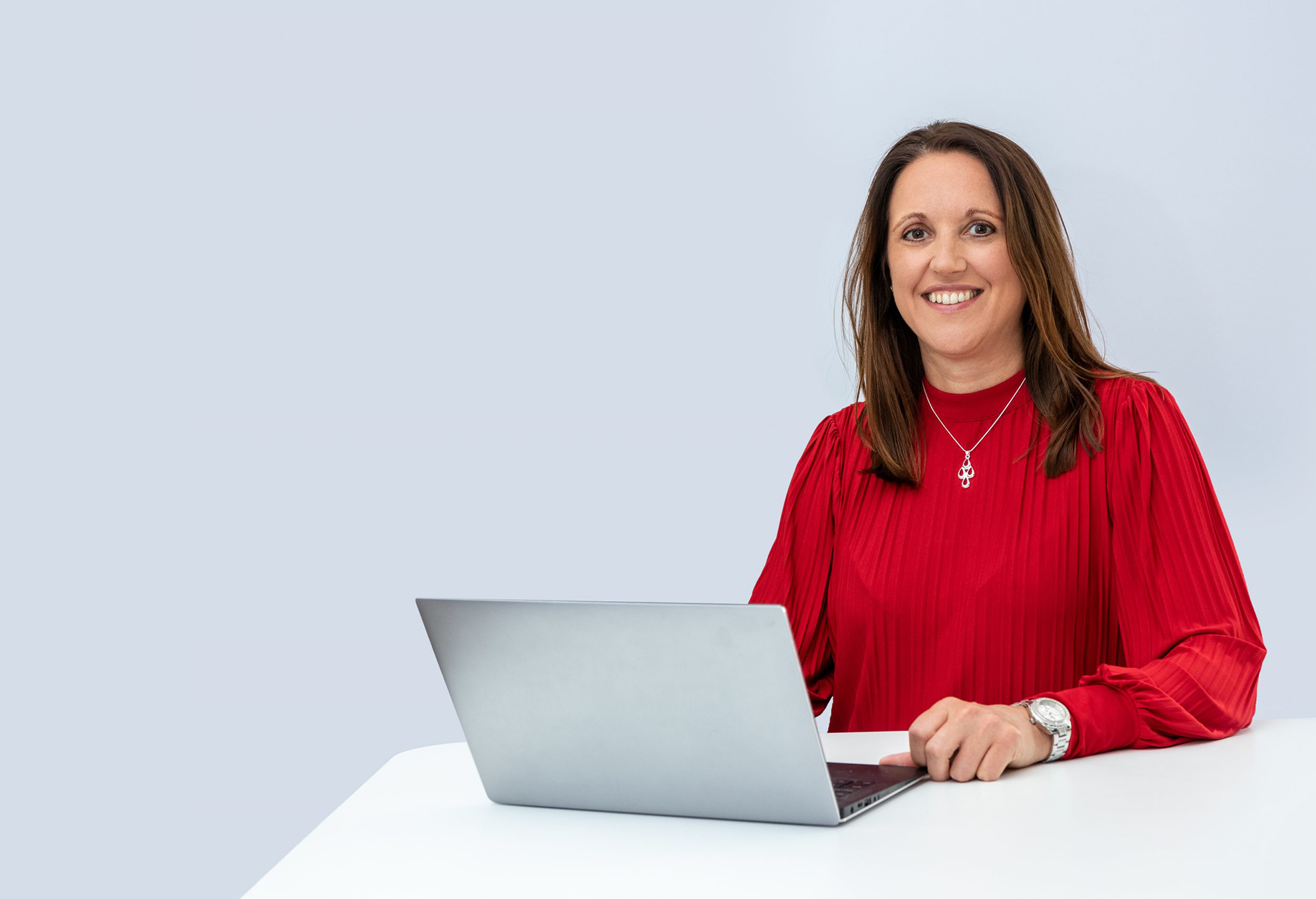
I’ve spent 27 years working in and around growing businesses and teams.
I’ve worked in-house with MDs and coached them for years. They’ve been dealing with exactly the same problems you’re dealing with now:
- Managers who are stretched and not able to focus on what’s important.
- Teams that depend on the MD more than they should.
- Good people who aren’t performing as well as they could.
Over the years I’ve worked with 152 MDs, owners and leaders in engineering, manufacturing, construction, tech and consultancy firms.
What actually matters is that I understand how your business works, because I’ve worked inside businesses like yours, responsible for getting the best out of their people.
I’ve worked for businesses during periods of rapid growth. One tripled in headcount and grew profit c. seven times. I was responsible for building the team that supported that growth. Over my career as People and Culture Director, I’ve restructured teams, redesigned roles, supported acquisitions and business expansions, and conducted over 3,000 interviews. Chartered MCIPD. Masters qualified.
My approach covers the strategy, the accountability and the people side. For the strategy and accountability, I bring very simple systems: clear priorities your team can act on, and a straightforward way of following through on what’s been agreed. No jargon and no complicated names, just a practical way of doing it.
On the people side, I bring a deep understanding of the behavioural and thinking patterns that drive how people operate. It’s what allows me to help you have the right conversation, in the right way, with the right person, rather than taking a one-size-fits-all approach that sounds good but doesn’t change anything.
I do this because I’ve watched some great MDs and business owners sit with the same problems for years, when the fix was just a handful of specific changes. That’s a waste, and it’s avoidable. And when those changes are made, it’s great to see the impact it has on the business.
Frequently Asked Questions
How does this work?
We start with a conversation to understand your business, your team, and what’s getting in the way. From there, I put together a plan and we work through it together, usually over an initial three months. Sessions are fortnightly, online, and focused on whatever is most important that week.
What types of businesses do you work with?
I work with MDs and owners of businesses with 20 to 200 people, in engineering, manufacturing, construction, tech and consultancy firms. The common thread is businesses where capable teams aren’t yet performing at the level the business needs.
How is this different from HR support?
HR covers compliance, contracts, and policy. What I do is different. I work with you on the conversations you’re having with your managers that aren’t changing how they work. Most MDs I work with have HR support as well. They solve different problems.
How is this different from business coaching?
Most business coaching covers strategy, marketing, sales, and goal setting. I focus specifically on the people side: how work is set up, how expectations are communicated, and how your team operates day to day. That’s the bit that usually isn’t working, even when everything else is in place.
How is this different from Vistage or ActionCOACH?
Vistage is a peer group where you meet monthly with other MDs and get challenged by the room. ActionCOACH is broader business coaching covering marketing, sales, systems, and goal setting. Both have their place.
What I do covers more of the ground in one place. I work with you one-to-one on the strategy, the structure, the conversations, and the behavioural patterns underneath. That includes the operational side: how work flows between people, where accountability is breaking down, what your managers need to do differently. And the personal side: how you lead, how you make decisions, how you handle the situations that don’t have obvious answers.
Some of my clients have done Vistage or ActionCOACH and found they still needed someone to help them actually implement the changes with the specific people in their business. That’s the bit I focus on.
Do I need to commit to a long programme?
Most clients start with a three-month engagement, which gives enough time to see real change. Some continue beyond that, some don’t need to.
Do you work face-to-face or online?
Mostly online, which means I can work with businesses anywhere in the UK. If you’re local to Bristol or North Somerset and prefer face to face, that works too.
Ready to get the business running without relying on you?
If you recognise the stage your business is in, let’s have a conversation about what’s actually going on and whether I can help.